Farm Volunteering in Peru was one of the most humbling experiences in my life.
If you told me that volunteering in Peru would completely alter my perception of life, I would have laughed. But spending time living and working with a local Quechuan family taught me more than any classroom and started my travel journey.
In this post I am sharing the raw truth — the culture shock, the cuisine, the hard work, the beautiful moments, and everything nobody told me before I went.
Click here for my detailed Huaraz travel guide including where to stay, the best hikes, and the best food
This post contains affiliate links. If you click and make a purchase, I may earn a small commission at no extra cost to you. I only recommend products and services I personally used and trust.
What is Farm Volunteering and How Does it Work?
While every experience and location will vary, farm volunteering is essentially a trade-off between labor and free food and lodging when traveling.
In my experience, I was tasked with recording videos, helping water crops, and taking care of animals — all relatively easy and enjoyable tasks to do while embedding myself in local culture and saving money.
Worldpackers was the key to this experience that made this journey possible. When I first decided that I wanted to volunteer abroad, I searched for many opportunities but Christian and his family at Wilkalodge in Huaraz felt natural.
When I mention that I volunteer abroad, I often receive mixed reactions— that I endure hard manual labor without payment. However, this could not be further from the truth, the time I spent with Christian did not feel like work, but rather immersing yourself in the daily lives of people around the world.
This is what an Authentic Adventurer strives to be, and we should embrace it.
The tradeoff living with Christian was well worth the $50 annual membership fee for Worldpackers.
I was treated to a quaint, private room alongside free food masterfully cooked by Christian’s mom in true Quechuan style. Even better, I was the only volunteer at the time, which made the experience that much more intimate.
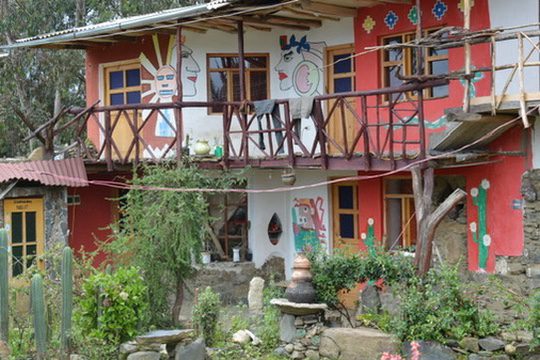
Where I Volunteered — Life in the Andean Highlands
While Worldpackers offers thousands if opportunities worldwide, I am going to recount my story to explain what a typical experience will look like.
The journey to Huaraz from Lima was a beautiful yet grueling journey climbing over 12,000 feet from the coast into the Andean highlands. At the time, this was the only route available before the new airport was built.
However, at $15 for an 8 hour journey, the comfortable seats and stunning scenery are hard to beat.
Hauraz felt like a different world, one that remained unchanged through centuries of colonization and modernization.
The change hit me almost immediately when I disembarked— the cool temperature, the thin air, and most notably, the Quechuan language.
The Quechuan language is a pre-Incan language that is totally unique from Spanish.
It hosts over 10 million speakers with dozens of dialects ranging from Colombia to Bolivia. Even as a self-proclaimed amateur linguist, it was quite difficult to pick up, thankfully the population also spoke Spanish.
I first met Christian, part-time shaman, part-time farmer outside of the Bus Station.
Christian was the typical Incan build, short in stature but with broad shoulders and the stamina of a professional athlete due to 35 years at elevation.
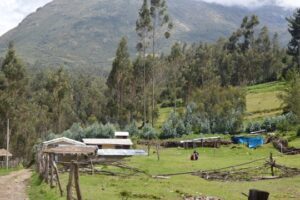
Wilkalodge Homestay was about a 30 minute colectivo (shared taxi) ride from Downtown Huaraz.
A bumpy ride later led us to the cobblestone streets of Paria, the hamlet that Wilkalodge was in,Paria had a bipolar feel, a mix of urban and rural. The skyline of Huaraz behind me yet a mere 10 minute walk east was the beginning of the Cordillera Blanca.
I would be lying if I hadn’t had the “Oh Crap” moment when I first wandered into Christian’s open-air wood fire kitchen. A few weeks before, I was swiping my meal plan at one of the nation’s top universities without a second thought.
Wilkalodge, like many homes in the developing world, are multi-generational— Christian’s mom, older brother, younger sister, and niece all lived in the house
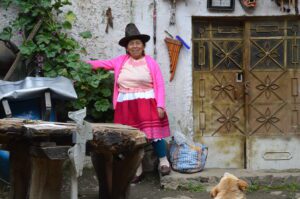
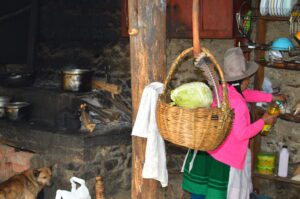
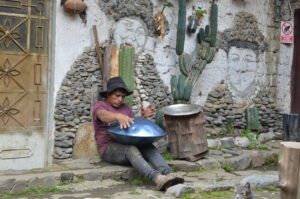
Day to Day Life on the Farm
San Pedro, or Wachuma is a sacred cacti in the Andean region that contains mescaline. Mescaline is a naturally occurring psychedelic that allegedly provides a euphoric and introspective experience for the user.
While I did not partake, I witnessed how fundamentally vital this plant is in Quechuan culture and the reverence the people have for it. Wachuma in the Andean tradition is a gateway to the spirit world, a world that unlike in western cultures, has been preserved and passed down through generations.
Christian is locally known as the “Last Inca” in Peru, a man who is fiercely proud of his heritage and is an ambassador of the Incan empire’s spiritual aspects. He spends his time administering San Pedro to people who travel from all over the world as well as maintaining his crops, including potato, maize, and quinoa.
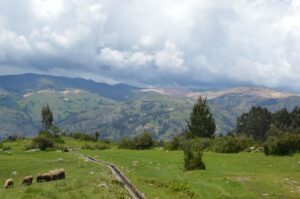
Most of Christian’s plots of land were about a 30-minute walk from his house, what followed was an unlikely procession —generations of Peruvian farmers and a trusty dog, trailed by an out of shape gringo. Nothing is more humbling than being outpaced by a 75-year-old man with a 20-pound sprayer on his back.
I compared the vastly different experience that me and my father had at the time, complicated and fractured due to external factors such as work, personality differences, and the distractions of modern life.
Something about the beautiful simplicity of subsistence farming passed down through generations draws a uncomfortable dichotomy of daily lives and intrafamily relationships in different cultures.
I’m not saying that Western families or communities should revert back to the Neolithic age and abandon modern life — even Tiktok has reached this community; rather I offer that we as family units or communities should rethink on what biological and evolutionary factors that make people happy.
Christian’s potatoes were more than just food, but a fruit of labor that provided purpose and meaning as well as subsistence for the people he cared for most.
Hiking Laguna Radian
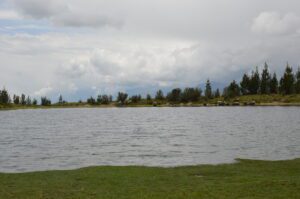
Deciding to hike Laguna Radian one day after arriving without acclimatization was the sole biggest mistake of my trip (alongside the worst sunburn of my life). Going from sea-level Lima to Huaraz at 12,000 feet made even the simplest tasks very difficult, no matter a 7-mile hike.
It turns out stopping to gasp for air every 5 minutes will make even the most superficial person have some introspection about their own surroundings. This place, the rolling hills with the Cordillera Blanca’s horizon in the background was straight out of a windows background.
The Ascent begins at the trailhead near the Wilkawain temple, built in the 1100 AD. by the Wari People. From there, you will follow an easily self-navigated route taking you through farming communities until you reach the high plains surrounding Laguna Radian.
While this hike may not be as scenic or dramatic as some of the more notable ones in the area like Laguna 69, Radian provides an easy enough opportunity to get acclimatized to this region.
The highlight of Laguna Radian was stopping by the Andes Domo glamping lodge. This unique stay, nestled on the high plains near Radian is surrounded by 360-degree views of the Cordillera Blanca.
While I didn’t stay there, the owners were extremely kind and cooked me lunch without notice and even walked with me back down to Wilkalodge.
Whether you are planning on trekking the 4 lakes trek or just want to rest after Radian, Andes Domo provides a fantastic overnight spot.
Rooms are $75 and breakfast is included
What to Pack for Farm Volunteering in Peru
Packing for farm volunteering in the Andes requires balancing both warm layers, durable work clothes, and altitude essentials — here’s exactly what I brought and what I wish I’d packed differently.
My Gear Recommendations for This Trip
Here’s exactly what I packed for farm volunteering in the Andes — these are the actual items I used and would bring again.
🥾 Oboz Bridger Mid Hiking Boot — My go-to for farm work and trekking. Durable and broke in fast. Check price here
🎒 Osprey — An Osprey Backpack is a portable and comfortable alternative to a suitcase. Mine is over 10 years old and still holds up perfectly well. Check price here
💡 Energizer LED Headlamp Pro — Invest in a high quality headlamp used constantly for early mornings and no-electricity nights. Check price here
🧥 33,000ft Packable Lightweight Jacket — Weather changes fast in the Andes, this saved me more than once. Check price here
💧 LifeStraw Go Series Water Filter Bottle — Saved money and plastic, worked great with farm water sources. Check price here
What Farm Volunteering in Peru Actually Costs
Volunteering through Worldpackers or any other platform is one of the most affordable ways to travel. Here’s a full breakdown of what I spent.
| Expense | Cost |
|---|---|
| Worldpackers annual membership | $50 (one time, covers all future trips) |
| Transport: Lima to Huaraz | $15 |
| Accommodation at Wilkalodge | Free (work exchange) |
| Food at Wilkalodge | Free (included with donation) |
| Local transport (colectivo) | A few soles |
| Total for this experience | Roughly $110-120 |
Compare that to a hostel and food costs alone in Huaraz, which could easily run $15-20 per day. Over even a week, farm volunteering saves you significantly more than the $50 membership cost — and gives you an experience money can’t normally buy.
My Recommended Travel Resources
Planning your trip? These are the exact tools and resources I use and trust for every adventure.
🌐 Stay Connected: I never travel without my Airalo eSIM — affordable data that works the moment you land, no hunting for local SIM cards. Get your eSIM here
🏨 Where to Stay: I always check Booking.com first for the best hostel and hotel deals. Search accommodation here
🎒 Best Tours & Activities: Klook has the best prices on tours, day trips, and experiences across Asia. Browse tours here
✈️ Cheap Flights: I use Kiwi.com to find the cheapest flights — especially for multi-stop routes. Search flights here
🛡️ Travel Insurance: Never skip this. Ekta covers adventure activities most insurers won’t. Get a quote here