In a world that feels increasingly self-obsessed, the Amazon served as a brutal reminder of how small and vulnerable we truly are as a species.This Amazon Survival Guide breaks down the most important tips and tricks you need to know.
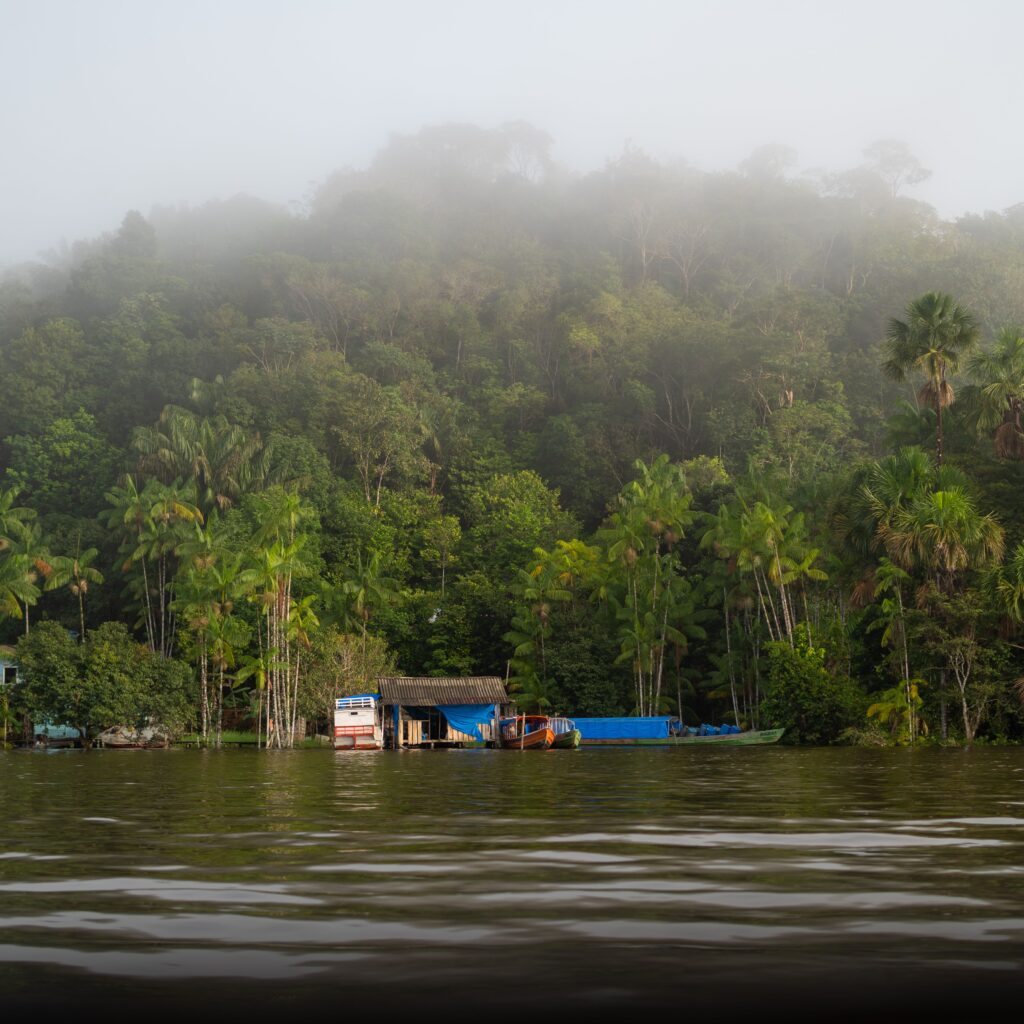
The Amazon is a magical yet terrifying that can kill you just as fast as it can save you. The rainforest is a place where even the air itself feels alive, and where the sounds surrounding your tent will make you question every assumption you had about your place in the modern world.
Nothing from my college experience in Virginia could have possibly prepared me for the Amazon. Not the dull biology classes, Attenborough documentaries, or the travel blogs. The reality that hit me standing at the edge of the rainforest was something that could not be conveyed through a screen. You must feel it — the humid air, the screeches of animals, and the jungle rising up surrounding you.
The Amazon rainforest covers over 5.5 million square kilometers covering 9 countries and produces approximately 20% of the world’s oxygen. The Amazon is also home to 10% of the world’s animal species, some still undiscovered by modern science. The river discharges more water to oceans than the next 7 largest rivers globally combined.
And yet its disappearing. The Amazon loses an estimated 10,000 square miles of forest annually through deforestation, development, and agriculture. Visiting here is more than a vacation, but rather an act of witnessing a destruction of a lifeline of humanity.
This guide is my honest account of a week spent camping deep inside the Pacaya Samiria National Reserve with Amazon Experience — one of the most reputable and responsible tour operators in the region. It covers everything I wish I had known before I went — the health preparation, the gear, the wildlife, the physical and emotional reality of jungle life, and the moments that genuinely changed how I see the world.
Come prepared. Come humble. And come ready to be reminded of exactly how small you are.
I also have an in detailed guide about Iquitos and the region here.
This post contains affiliate links. If you click and make a purchase or booking, I may earn a small commission at no extra cost to you. I only recommend products, services and experiences I personally use and trust. Thank you for supporting The Authentic Adventurer!
What is Pacaya Samiria National Reserve?
Pacaya Samira is the second largest national reserve in Peru, covering over 2 million hectares of pristine and untouched rainforest. The preserve can only be reached by boat.
The namesake of the reserve stems from the two rivers that converge there, the Pacaya and Samira, both tributaries of the massive Maranon that eventually feeds into the Amazon. The rivers felt like a massive labyrinthine network of waterways with no end in sight.
The biodiversity here is simply staggering. The Pacaya Samiria is home to over 500 species of birds, 102 species of mammals, 69 species of reptiles, and 256 species of fish. It is also one of the only parts of Peru where you can see the elusive Amazon Pink River Dolphin and the Black Caiman. Personally seeing these animals was truly breathtaking.
Why I Chose Amazon Experience
Choosing the right tour operator for a remote, dangerous jungle expedition is not a decision to take lightly. The difference between a certified and responsible guide is worth the premium price you may pay. However, the reserve holds strict standards to keep visitors safe in the reserve.
My primary guide was Lisser — a man with almost transcendental knwoledge about the Amazon. He often recounted stories about growing up in the jungle, the skills his father taught him that he displayed to this day. He could tell a speciefs of animal from their smell, read the current of the rvier to predict the weather, and could communicate with local tribes in ways that I couldn’t even begin to understand.
I spent around $800 for a 6 night/ 7-day tour with Amazon Expeditions. This was a private tour with 2 guides and 1 boat captain/cook. Everything was included in the price, the delicious food, transportation to and from, all camping equipment, and one life-changing experience.
Amazon Experience runs tours ranging from 3 days to over 10 days and also operates a jungle lodge outside Iquitos for travelers who prefer a more comfortable base. Their Pacaya Samiria expeditions include all meals, camping equipment, guides and boat transportation. If you are considering this trip I strongly recommend booking as far in advance as possible — their best guides fill up quickly especially during dry season.
| Detail | Info |
|---|---|
| Location | Loreto Region, northeastern Peru |
| Size | 2.08 million hectares |
| Status | Second largest protected area in Peru |
| Access | Boat from Iquitos only — no road access |
| Entry | Licensed guide required — no solo entry |
| Best season | Dry (May-Sept) for large predators |
| Wet season | Oct-May for birds and dolphins |
| UNESCO | Designated as a Ramsar Wetland of International Importance |
Essential Health Prepartion for the Amazon
The Amazon is one of those places where complacency can be lethal and being prepared is of the utmost importance. While preparation can feel overwhelming, I aim to provide clarity and simplification of this vital process.
Vaccinations
| Vaccine | Required/Recommended | Timing | Notes |
| Yellow Fever | Depends on the area (PS not required) | 10+ days before arrival | Carry your yellow card at all times — required for entry in some areas |
| Hepatitis A | Strongly recommended | 2+ weeks before | Transmitted through contaminated food and water |
| Hepatitis B | Recommended | Series of 3 shots | Standard travel vaccine — start early |
| Typhoid | Recommended | 2 weeks before | Risk increases with street food consumption |
| Rabies | Recommended | 3 shots over 21 days | Wildlife exposure risk in jungle environment |
| Tetanus | Recommended | Check if up to date | Cuts and scrapes in jungle are common |
| Malaria tablets | Strongly recommended | Start before travel | Prescription required — see your doctor |
Getting the Yellow Fever Vaccine will depend on where you go in the Amazon, however life will be easier Many domestic flights within Peru and border crossings require proof of yellow fever vaccination when traveling to the Amazon region. Carry your International Certificate of Vaccination at all time throughout your trip.
Malaria Prevention
Malaria is present in the Amazon region of Peru and should be taken seriously. However, it is entirely manageable with the right preparation. Consult your doctor at least 4-6 weeks before travel to get a prescription for antimalarial medication. Common options include Doxycycline, Malarone and Mefloquine — your doctor will recommend the right one based on your personal health history and any existing medications you take.
Take your medication exactly as prescribed — before, during and after your trip. Stopping early is one of the most common mistakes travelers make and significantly increases your risk.
Mosquito Protection
Mosquitoes in the Amazon are relentless and carry multiple diseases beyond malaria including Dengue fever, Zika virus and Chikungunya. This is categorically not the place for natural or low-DEET bug spray. Here is what I used and what worked:
- DEET based repellent at minimum 30% concentration — I used 40% and reapplied every two hours
- Long sleeves and long trousers at dawn and dusk when mosquito activity peaks dramatically
- Mosquito net over your sleeping area every single night without exception
- Permethrin treated clothing — spray all your clothes before your trip and let dry completely
- Check your entire body for bites every evening — in the jungle this becomes second nature quickly
I recommend buying mosquito spray when you arrive in Iquitos. The ingredients in the repellent their seemed to work much better than my American bought bottle.
Heat and Humidity Management
The combination of equatorial sun and extreme Amazon humidity creates conditions that exhaust even experienced travelers faster than they expect. You sweat constantly, your clothes are never fully dry, and the constant buzz and bites of mosquitos are the cherry on top.
Drink water constantly and proactively rather than waiting until you feel thirsty. By the time thirst registers in this environment you are already dehydrated. I drank significantly more water during my week in Pacaya Samiria than any other region I visited.
While personally, I did not suffer any heat-related illnesses, its good to recognize the warning signs of heat exhaustion — dizziness, nausea, heavy sweating followed by a sudden reduction in sweating, rapid heartbeat and confusion. If you feel any of these symptoms stop immediately, find shade, drink water with rehydration salts and tell your guide.
Wildlife Safety in the Amazon
The Amazon’s wildlife is extraordinary and the danger it presents to visitors is vastly overstated in popular culture. However it is real, it deserves respect, and understanding it before you arrive makes the difference between confident encounters and unnecessary anxiety.
The most important thing I can tell you about wildlife safety in Pacaya Samiria is this: follow your guide. Lisser kept Me entirely safe for a week in one of the most biodiverse and dangerous environments on earth. He knew every sound, sight, and smell, whether it was a dangerous animal or not.
| Animal | Risk Level | Reality | How to Stay Safe |
| Black Caiman | Medium | Rarely aggressive if unprovoked and distance maintained | Never swim at night — follow guide instructions at all times |
| Anaconda | Low | Extremely rare encounter — not actively dangerous to humans | Observe from a distance, be ware of sah |
| Piranha | Low-Medium | Mostly scavengers — attacks on humans are rare | Avoid swimming in still water especially during dry season |
| Bullet Ant | Medium | Sting rated most painful of any insect — not life threatening | Do not touch trees and check before sitting anywhere |
| Botfly | Low | Larvae burrow under skin — unpleasant but not dangerous | Wear long sleeves and use permethrin treated clothing |
| Mosquitoes | HIGH | Your biggest actual threat — disease vector for multiple illnesses | DEET 40% ,permethrin clothing, mosquito net every night |
| Jaguar | Very Low | Rare to see but has killed humans | Consider yourself extraordinarily lucky if you see one |
| Electric Eel | Low-Medium | Shock can be serious in shallow water | Stay in boat in murky or shallow water — do not wade |
| Poison Dart Frog | Low | Beautiful and fascinating — only dangerous if touched or ingested | Look do not touch ever |
The Amazon has anmals here that can harm you,But the Amazon is not trying to kill you — it is simply indifferent to your presence, which naturally can be deadly.The jungle operates on its own logic entirely independent of human visitors. Respect that logic, follow your guide, and the wildlife you encounter will be one of the greatest privileges of your life rather than a source of anxiety.
The Complete Amazon Gear List
Packing for a week in the Amazon is less about bringing the right things and more about not bringing the wrong things. In my situation, I was coming from the Andes so that needed a whole different packing list and some compromises. I had 2 backpacks, including my Osprey 75 Liter pack and a North Face Vault. The Osprey was great for holding my clothes and materials given its massive size. The North Face was used as a necessitty bag, one that held my valuables and things that I could not bear to lose.
Essential Gear — Non Negotiable
Get your complete Amazon gear list by clicking the items on the chart
| Item | Why You Need It | Notes |
| DEET 40% mosquito repellent | Single most important item you will pack (Buy in Country) | Bring more than you think — reapply constantly |
| Permethrin clothing spray | Treat all clothes before departure | Apply at home — needs 24hrs to dry properly |
| Lightweight hammock | Essential for ferry journey — useful in camp (Buy there) | Get a proper travel hammock not a toy one |
| Headlamp + spare batteries | Jungle nights are pitch black — no exceptions | Bring two if possible — one always on your person |
| Dry bag 10-20L | Protect electronics from river spray and rain | Waterproof your camera and phone religiously |
| Quick dry shirts x4 | You will sweat through everything constantly | No cotton — ever. Synthetic only |
| Quick dry trousers x2 | Long legs essential for mosquito protection | Light color helps spot insects on clothing |
| Waterproof hiking boots | Mud and water are a permanent condition | Break these in before your trip — blisters in jungle are miserable |
| Rain jacket lightweight | Daily rain is guaranteed | Packable — you need to carry it everywhere |
| Water purification tablets | Essential for camping away from base (Buy there) | Backup to your guide’s water supply |
| Oral rehydration salts | Dehydration risk in Amazon humidity is high (Buy there) | Mix into afternoon water as standard practice |
| Basic first aid kit | Cuts and insect reactions are common (May be provided) | Include antiseptic, antihistamine, blister treatment |
| SPF 50+ sunscreen | Equatorial UV is intense even through cloud cover( Buy local) | Reapply every two hours without exception |
| Microfibre towel | Dries fast in humidity — cotton towels never dry | Pack two — one always wet in these conditions |
| Power bank | No charging points in jungle | Get a large capacity one — you use it for everything |
| Ziplock bags multiple sizes | Keep absolutely everything dry (Buy there) | The most underrated packing item for jungle travel |
What NOT to Bring
- Heavy jeans or any cotton clothing — they absorb moisture and never dry in jungle humidity
- Valuables or expensive jewelry — leave everything you would be devastated to lose in your Iquitos hostel
- More than one pair of shoes — space is premium and your boots will handle everything
- Anything in non-waterproof packaging — the Amazon will find its way into everything
- Expensive camera equipment unless you have proper waterproof protection for all of it
Wildlife of Pacaya Samiria — What You Can Expect to See
One of the most common questions I receive about the Amazon is whether you actually see wildlife or whether you spend a week straining your eyes at empty riverbanks. The honest answer is that in Pacaya Samiria, with a knowledgeable guide, you will see more wild animals in a week than most people see in a lifetime of nature documentaries. The key word is guide — without Lisser I would have missed the vast majority of what we saw.
| Animal | Best Season | Where to Look | Tips |
| Black Caiman | Both — night best | Riverbanks after dark | Torchlight reflects in eyes from remarkable distance |
| Amazon Pink Dolphin | Both seasons | Open river sections | Most active at dawn — listen for surfacing sounds |
| Giant River Otter | Dry season | Inland lakes and calm water | Loud and social — you will often hear them before you see them |
| Anaconda | Dry season | Shallow lake edges and mudflats | Patience required — early morning is best |
| Monkeys multiple species | Both seasons | Forest canopy overhead | Listen for movement and breaking branches above |
| Macaws and toucans | Wet season | Riverbank vegetation | Bring binoculars — tree canopy makes spotting difficult |
| Piranha | Both seasons | Rivers and flooded forest | Your guide will let you fish for them — genuinely fun |
| Hoatzin bird | Both seasons | Waterside vegetation | Strange prehistoric appearance — unforgettable when seen |
| Three-toed sloth | Both seasons | Cecropia trees specifically | Look for a lump that doesn’t quite look like a branch |
| Caiman Lizard | Dry season | Branches overhanging water | Spectacular coloring — bright orange head |
The most magical animal I saw was the pink amazon dolphin, a truly rare experience and an animal only seen in the region. These beautiful animals are quite endagered and are viewed as mythical in local cultures. Experiencing these creatures in person was truly a once in a lifetime experience and one I will never forget

Is Amazon Experience Worth It — My Honest Review
I want to be direct about this because I know it is the question most people are actually asking when they read a post like this one.
Yes. Indisputably yes. Amazon Experience was worth every dollar I spent and I would book them again without hesitation.
What they did exceptionally well was make an environment that could easily feel threatening instead feel like a place of extraordinary privilege. Lisser’s knowledge transformed every hour on the river from passive observation into active understanding. The logistics were handled seamlessly — food, camping equipment, safety, navigation, in a way that allowed me to be completely present to the experience rather than worried about the mechanics of it.
The only honest note I would add is that camping in the Amazon for a week is physically demanding. If you are not comfortable with basic outdoor conditions — heat, insects, basic camp food, sleeping on a mat — the lodge option they also offer may be worth considering.
For anyone physically able and willing to embrace a week of genuine discomfort in exchange for something genuinely extraordinary — book the camping expedition. You will not regret it.
Your Complete Amazon Pre-Trip Checklist
6-8 Weeks Before Departure
- ☐ Book your Amazon Experience tour — spots fill fast in dry season
- ☐ Visit a travel health clinic and discuss all required vaccinations
- ☐ Start your Hepatitis B vaccination series if not already completed
- ☐ Begin rabies pre-exposure prophylaxis series if recommended
- ☐ Get your malaria prescription and confirm when to start taking it
- ☐ Purchase comprehensive travel insurance — World Nomads recommended
- ☐ Book flights to Iquitos via Lima on Kiwi.com
2-4 Weeks Before Departure
- ☐ Complete yellow fever vaccination and receive your yellow card
- ☐ Treat all clothing with permethrin spray — allow 24hrs to dry
- ☐ Purchase DEET 40% repellent — buy more than you think you need
- ☐ Buy dry bag, power bank and headlamp with spare batteries
- ☐ Purchase quick dry clothing if you do not already own it
- ☐ Get your Airalo eSIM sorted for Peru connectivity
- ☐ Break in your waterproof hiking boots — blisters are miserable
1 Week Before Departure
- ☐ Confirm all bookings with Amazon Experience
- ☐ Download offline maps of the Iquitos region to your phone
- ☐ Notify someone at home of your complete itinerary and check-in plan
- ☐ Check your yellow card is packed and accessible
- ☐ Begin malaria tablets if your prescription schedule requires it
- ☐ Pack your bag and weigh it — if over 10kg remove something
Day of Departure
- ☐ Apply sunscreen and repellent before boarding any transport
- ☐ Charge all devices and your power bank to full
- ☐ Leave all valuables locked safely in your Iquitos hostel
- ☐ Confirm pickup time and location with Amazon Experience
- ☐ Trust your guide completely — from this point they know better than you
My Recommended Travel Resources
These are the exact tools and resources I use and trust for every adventure. Affiliate links are marked — using them costs you nothing extra and helps keep this blog running.
| Resource | What It Is | Why I Recommend It | Link |
| Airalo eSIM | International data SIM | Instant connectivity from the moment you land in Lima | airalo.com/affiliate |
| Booking.com | Accommodation | Best selection of Iquitos hostels and hotels | booking.com |
| Kiwi.com | Flights | Best prices on Lima to Iquitos domestic flights | Kiwi |
| Klook | Tours and activities | Day trips and experiences across Peru | Klook |
| Ekta | Travel insurance | Covers jungle trekking and adventure activities | Ekta |
| Amazon Experience | Jungle tours | The only operator I personally recommend for Pacaya Samiria | Direct |
Final Thoughts — Why the Amazon Changed Me
I have been trying to write this conclusion for longer than I care to admit. Every draft felt inadequate — too small for what the experience actually was. So I will say it simply.
The Amazon rainforest is the most alive place I have ever been. Not alive in the way that a busy city is alive — chaotic and human and purposeful. Alive in the way that makes human purpose feel briefly irrelevant and strangely comforting in its irrelevance. The jungle does not need you. It was here before you and it will be there long after you die, no matter how hard we try to destory it.
Going there does not save it. But witnessing it changes you in ways that make you want to try. And maybe that is enough.
Come prepared. Come humble. Come ready to be small.
Have you camped in the Amazon or are you planning to? Drop your questions in the comments below — I read and reply to every single one.
For more Peru content read my complete Iquitos city guide and my Amazon health and safety standalone post linked in the resources section above.
— Max, The Authentic Adventurer
theauthenticadventurer.com
sapienmediagroup@gmail.com